Shipments to the United States - due to the new tariffs DHL has suspended delivery of goods to the USA until further notice.
See Deutschepost/DHL
To mitigate this, we have introduced the option of delivery of a PDF version via e-Mail, this is now an option on the “Postage to” selector to all customers.
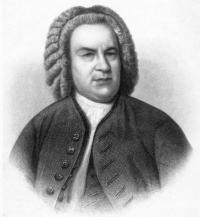
Bach, Johann Sebastian. Pupil of his father Johann Ambrosius Bach (violin) and his brother Johann Christoph Bach (clavichord); studied at St. Michael’s, Lüneberg, under Bohm (organ). Organist of St. Boniface’s, Arnstadt, 1703; St. Blasius’, Mühlhausen, 1707; court organist in Weimar, 1708. Conductor in Weimar, 1714; to Prince Leopold of Anhalt-Cöthen, 1717; musical director of Leipzig University, 1723; choirmaster of St. Thomas’, Leipzig, 1723-50; St. Nicholas’, Leipzig, 1723-50; court composer to the Elector of Saxony, 1736; conductor to the Duke of Weissenfels, 1736. Composed church and secular cantatas, motets, oratorios, masses, overtures (suites), concertos, chamber music, organ and clavier works, &c. Son of Johann Ambrosius Bach; brother of Johann Christoph Bach; father of Christoph Friedrich Bach, Johann Christian Bach, Johann Gottfried Bernhard Bach, Karl Philip Emanuel Bach and Friedemann Bach. b. Eisenach, Germany, Mar. 21st, 1685; d. Leipzig, July 28th, 1750.
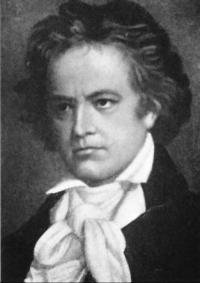
Beethoven, Ludwig van. Studied in Bonn with Pfeiffer, ~Eeden_Gillesvanden_d1782 ~ (organ), Rovantini (violin) and Christian Gottlob Neefe; in Vienna with Haydn, 1792, and in secret with Schenck; with Albrechtsberger (counterpoint) and Schuppanzigh (violin), 1794. Assistant court organist in Bonn, 1782. Cembalist and conductor to the Vienna Orchestra, 1783; received the freedom of the city of Vienna, 1815. Became deaf, 1822. Composed symphonies, an opera, piano pieces, piano concertos, string quartets, masses, songs, chamber music, &c. b. Bonn, Germany, Dec. 15th, 1770; d. Vienna, Mar. 26th, 1827.
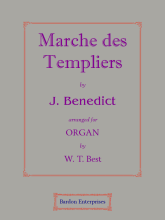
Benedict, SirJulius. Knighted, 1871. Pupil of C. Ludwig Abeille, Johann Nepomuk Hummel and Carl Maria von Weber. Conducted the Kärnthnerthor Theatre, Vienna, Austria, 1823-25; the San Carlos Orchestra, Naples, Italy; the Lyceum Theatre, London, England, 1836; the Norwich Festival, 1845-78; the Liverpool Philharmonic, 1876-80; professor at the Royal Academy of Music, London; toured the U.S.A., 1850-51. Composed operas, oratorios, a symphony, songs. Moved in London, England, 1835. b. Stuttgart, Germany, Nov. 27th, 1804; d. London, England, June 5th, 1885.
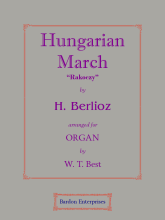
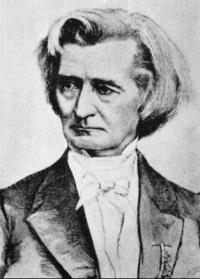
Berlioz, Louis Hector. Legion of Honour (1839). Studied medicine at the Paris Medical School, 1821; music at the Paris Conservatory, 1823-30; in Italy after gaining the Prix de Rome, 1830. Journalist with the “Revne Euroéenne”; the “Courrier de l’Europe, Journal des Débats”; the “Gazette Musicale de Paris”, 1834-; toured Germany, 1840; Russia, 1867; member of the Académie; librarian of the Paris Conservatory, 1852-69. Composed operas, symphonies, a requiem, oratorios, and overtures. Wrote a “treaties on Instrumentation”. b. Côte-Saint-André, near Grenoble, France, Dec. 11th, 1803; d. Paris, Mar. 8th, 1869.
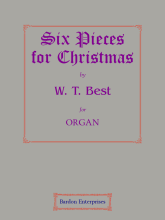
Six Pieces for Christmas (1. “Sit Laus plena” - Allegro con brio; 2. “Quem vidistis pastores” - Andante con moto in E; 3. “Psallite omnes Angeli” - Allegro vivace in C; 4. “Venite in Bethlehem” - Andantino in F; 5. Pastorale - Allegretto in B flat; 6. “O Magnum Mysterium” - Andante in E flat)
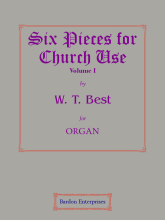
Six Pieces for Church Use Vol. 1 (1. Andante con moto in E; 2. Allegro moderato in A minor; 3. Andante in B flat (No 1); 4. Allegro con brio in F; 5. Adagio in D; 6. Allegro moderato in C (with chorale))
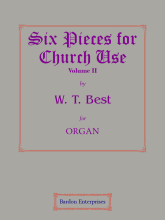
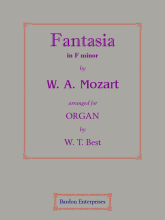
Six Pieces for Church Use Vol. 2 (1. Andante serioso in D minor; 2. Fuga in A (adagio molto); 3. Andantino in G; 4. March for a Church Festival in D; 5. Alla Breve in C; 6. Fantasia in F)
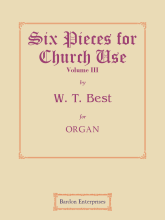
Six Pieces for Church Use Vol. 3 (1. Chorale Prelude on the Tune “London” in E flat; 2. Fuga in C (allegro moderato); 3. Chorale Prelude on the Tune “Halifax” in A; 4. Andantino in E flat; 5. Chorale Prelude on the Tune “St. Bride” in A minor; 6. Andante in B flat (No 2))
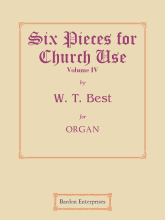
Six Pieces for Church Use Vol. 4 (1. Andante religioso in F; 2. Allegro maestoso e vivace in C minor; 3. Andante tranquillo in A; 4. Largo & allegro moderato in G; 5. Adagio in A flat; 6. Allegro con brio in E)
Six Pieces for Church Use Vol. 5 (1. Wedding march; 2. Allegro giocoso in G; 3. Andante con moto in A; 4. Prelude on the Hynn “Stabat Mater” in D minor; 5. Funeral March in F sharp minor; 6. Adagio elegiaco in E minor)
Twelve Short Preludes on Old English Psalm-Tunes (1. “Lord, hear the voice of my complaint”; 2. “Through all the changing scenes of life”; 3. “All people that on earth do dwell”; 4. “Give ear, thou judge of all the earth”; 5. “My soul, praise the Lord”; 6. “Thou turnest man, O Lord, to dust”; 7. “Hail! Sacred feast”; 8. “All praise to thee, my God, this night”; 9. “My soul for help on God relies”; 10. “Thy mercies, Lord, shall be my song”; 11. “Bow down thy gracious ear”; 12. “O praise the Lord with one consent”)
Chopin, Frédérick François (Fryderyk Franciszek). Pupil of Adalbert Zywny; studied at the Warsaw Conservatory under Joseph Elsner. Composed piano music. b. Zelazowa Wola, near Warsaw, Poland, Mar. 1st, 1810; d. Paris, France, Oct. 17th, 1849.
Gounod, Charles François. Studied at the Paris Conservatory under Halévy (counterpoint), Paër (composition) and Lesueur (composition), 1836. Organist at the Missions Étrangères, Paris; of St. Cloud’s, Paris. Conducted the Paris Orphéon, 1852-60. Composed oratorios, masses, operas, cantatas, songs, orchestral pieces, &c. b. Paris, France, June 17th, 1818; d. St. Cloud, Oct. 18th, 1893.
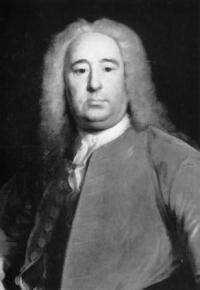
Händel (Handel, Haendel, Hendel), Georg Friedrich (George Frederick). Studied at Halle Cathedral, 1692, under Friedrich W. Zachau (counterpoint, organ, harpsichord and oboe). Assistant organist of Halle Cathedral, 1697-1702; organist there, 1702-03. Violinist at Hanover Opera, 1703; in Italy, 1706; conductor to the Elector of Hannover, 1709; to the Duke of Chandos, England, 1718; music master to the Prince of Wales; director of the Royal Academy, London. Composed operas, oratorios, serenatas, odes, anthems, songs, cantatas, concertos, suites, &c. b. Halle, Germany, Feb. 23rd, 1685; d. London, England, Apr. 14th, 1759.
Pieces from choral work “Semele” (1. “Attend the pair”; 2. “Endless pleasure”; 3. “Bless the glad earth” & “And to that pitch th’ eternal accents raise”; 4. Sinfonia (The Descent of Apollo))
Title:
Pieces from choral work “Semele” (arr. by W. T. Best)
Pieces from the Occasional Oratorio (1. “Or brought full low with iron sceptre”; 2. “God found them guilty”; 3. “All his mercies shall endure”; 4. “Hallelujah”)
Title:
Pieces from the Occasional Oratorio (arr. by W. T. Best)
Pieces from the Oratorio “Belshazzar” (1. “All empires upon God depend”; 2. “Jehovah hath redeemed Jacob”; 3. “By slow degrees the wrath of God”; 4. “Of things on earth”; 5. “Bel boweth down, Nebo stoopeth”)
Title:
Pieces from the Oratorio “Belshazzar” (arr. by W. T. Best)
Pieces from the Oratorio “Israel in Egypt” Book 1 (1. “They loathed to drink”; 2. “He gave them Hailstones”; 3. “He smote all the First-born”; 4. “But as for the people”; 5. “Egypt was glad when they departed”)
Title:
Pieces from the Oratorio “Israel in Egypt” Book 1 (arr. by W. T. Best)
Pieces from the Oratorio “Israel in Egypt” Book 2 (1. “He rebuked the Red Sea” & “He led them through the deep”; 2. “But the waters overwhelmed their enemies”; 3. “And Israel saw that great work” & “And believed the Lord”; 4. “I will sing unto the Lord”; 5. “He is my God” & “And I will exalt him”)
Title:
Pieces from the Oratorio “Israel in Egypt” Book 2 (arr. by W. T. Best)
Pieces from the Oratorio “Israel in Egypt” Book 3 (1. “Thy right hand, O Lord, is become glorious”; 2. “Who is like unto Thee?” & “The earth swallow’d them”; 3. “The People shall hear, and be afraid”; 4. “Thou shalt bring them in”)
Title:
Pieces from the Oratorio “Israel in Egypt” Book 3 (arr. by W. T. Best)
Pieces from the Oratorio “Jephtha” (1. “Chemosh no more will we adore”; 2. “O God, behold our sore distress”; 3. “They now contract their boist’rous pride”; 4. “They ride on whirlwinds”; 5. “Doubtful fear”; 6. “Theme sublime”)
Title:
Pieces from the Oratorio “Jephtha” (arr. by W. T. Best)
Pieces from the Oratorio “Joseph and his brethren” (1. Overture . Minuet; 2. “Joyful sounds, melodious strain”; 3. “Immortal pleasures”; 4. “Blest be the man”; 5. “O God, who in thy Heav’nly hand”, “Thou know’st our wants before our prayer” & “O Lord we trust alone in Thee”; 6. “Eternal Monarch of the sky” & “And grant us aid”)
Title:
Pieces from the Oratorio “Joseph and his brethren” (arr. by W. T. Best)
Pieces from the Oratorio “Joshua” Book 1 (1. “To long posterity”; 2. “The Lord commands”; 3. “May all the Host of Heav’n”; 4. March; 5. “Almighty Ruler of the Skies”)
Title:
Pieces from the Oratorio “Joshua” Book 1 (arr. by W. T. Best)
Pieces from the Oratorio “Joshua” Book 2 (1. “How soon our tow’ring hopes are cross’d”; 2. “Hail! mighty Joshua, hail!”; 3. “Shall I in Mamre’s fertile plain”; 4. “Father of mercy”; 5. “The Great Jehovah”)
Title:
Pieces from the Oratorio “Joshua” Book 2 (arr. by W. T. Best)
Pieces from the Oratorio “Samson” Book 1 (1. “O first created beam”; 2. “Then shall they know”; 3. “Then round about the starry Throne”; 4. “To man, God’s universal law” & “Thus shall his life be ne’er dismay’d”)
Title:
Pieces from the Oratorio “Samson” Book 1 (arr. by W. T. Best)
Pieces from the Oratorio “Samson” Book 2 (1. “Honour and arms scorn such a foe”; 2. “Fix’d in his everlasting seat”; 3. Funeral March; 4. “Let their celestial Concerts”)
Title:
Pieces from the Oratorio “Samson” Book 2 (arr. by W. T. Best)
Pieces from the Oratorio “Saul” Book 2 (1. “Preserve him for the glory of thy name”; 2. “Envy! Eldest born of hell”; 3. “Sin not, O King”; 4. Funeral March)
Title:
Pieces from the Oratorio “Saul” Book 2 (arr. by W. T. Best)
Pieces from the Oratorio “Solomon” Book 3 (1. “Swell the full chorus”; 2. “Music, spread thy voice around”; 3. “Thus rolling surges rise”; 4. “The name of the wicked”)
Title:
Pieces from the Oratorio “Solomon” Book 3 (arr. by W. T. Best)
Pieces from the Oratorio “Susanna” (1. “Tremble, guilt”; 2. “Ask if you damask rose be sweet”; 3. “Let justice reign”; 4. “Thy wedded truth”; 5. “With thy own ardors”; 6. “Bless’d be the day”)
Title:
Pieces from the Oratorio “Susanna” (arr. by W. T. Best)
Mendelssohn-Bartholdy, Jakob Ludwig Felix. Hon.Ph.D. (Leipzig, 1841). Pupil of Berger, Zelter and Hennings; Moscheles, 1824; studied at Berlin University. Organist. Visited England, 1829; toured Germany, Austria, Italy, and France, 1830-32. Conducted the Lower Rhine Festival, Düsseldorf, 1833; Cologne, 1835; Gewandhaus Orchestra, Leipzig, 1835; Philharmonic Concerts, London, 1844; a chief organizer of the Leipzig Conservatory, 1843. Composed oratorios, cantatas, symphonies, incidental music, chamber music, concertos, piano and organ pieces, &c. Brother of Fanny Hensel. b. Hamburg, Germany, Feb. 3rd, 1809; d. Leipzig, Nov. 4th, 1847.
Pieces from the Oratorio “St. Paul” (1. “But the Lord is mindful of his own”; 2. “Sleepers wake! a voice is calling”; 3. “How lovely are the Messengers”)
Title:
Pieces from the Oratorio “St. Paul” (arr. by W. T. Best)
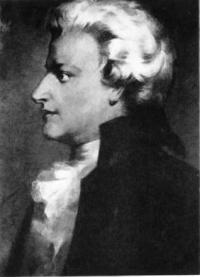
Mozart, Johann Chrysostemus Wolfgang Amadeus. Pupil of his father (clavichord), self taught organ and violin; of Johann Christian Bach; Haydn, Tenducci and Manzuoli. Organist and concertmaster to the Archbishop of Salzburg, 1779. Concertmeister to the Archbishop of Salzburg, 1768; chamber composer to the Emperor; toured Italy, 1769; elected a member of the Bologna Philharmonic Academy. Composed masses, operas, songs, symphonies, concertos, chamber music, clavier music, organ sonatas. Son of Leopold Mozart. b. Salzburg, Austria, Jan. 27th, 1756; d. Vienna, Dec. 5th, 1791.
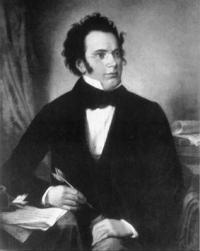
Schubert, Franz Seraph Peter. Pupil of Holzer (piano, organ, singing and thorough-bass), Ruzicka and Salieri; chorister in the Vienna Court Choir. Composed symphonies, dramatic pieces, overtures, concertos, chamber music, piano music, songs, &c. b. Lichtenthal, near Vienna, Austria, Jan. 31st, 1797; d. Vienna, Nov. 19th, 1828.
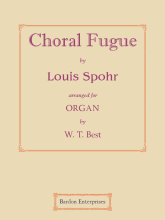
Spohr, Ludwig (Louis). Pupil of Riemenschneider and Dufour; studied in Brunswick with Kinisch (violin), Hartung (theory) and Maucourt (violin); pupil of Dufour, Kunisch and Franz Eck. Violinist; director of the Stad Theatre, Frankfurt-am-Main, 1817. Composed operas, symphonies, chamber, church and choral music, &c. b. Brunswick, Germany, Apr. 5th, 1784; d. Cassel, Oct. 22nd, 1859.
 icon to add it to your shopping basket.